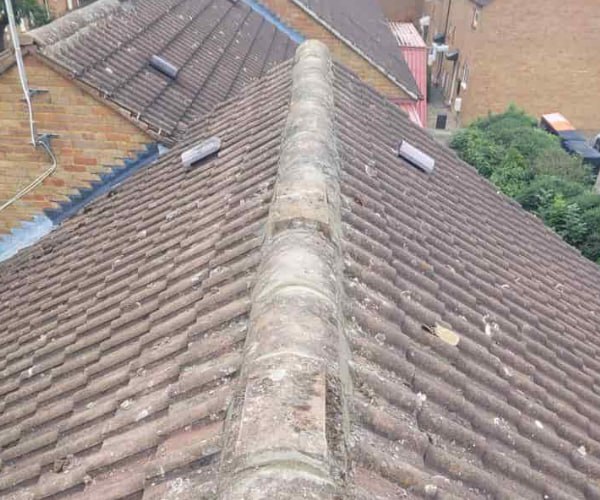
Can a Single Damaged Roof Tile Cause Problems Across Your Roof?
Why One Damaged Tile Should Not Be Ignored
A single cracked, broken or displaced roof tile may appear to be a minor defect. In many cases, the damage remains localised and can be resolved with a straightforward repair. However, leaving the affected area exposed can allow water and wind to reach parts of the roof that were not designed for direct weather exposure.
For homeowners in Kempston, Bedfordshire, early assessment is important because a small opening can place additional strain on the underlay, battens and neighbouring tiles. Although one damaged tile will not automatically cause failure across an entire roof, it can begin a wider pattern of deterioration.
How Roof Tiles Work Together
Tiles are arranged in overlapping courses that guide rainwater down the roof and towards the guttering. Each tile forms part of a connected covering, with the correct overlap and alignment helping to prevent water from reaching the layers beneath.
When one tile cracks or moves out of position, it can interrupt this arrangement. The resulting gap may expose fixings, underlay or sections of adjacent tiles. The surrounding area may still appear intact, but its ability to manage wind-driven rain can be reduced.
Water Can Travel Beyond the Damaged Tile
Water entering through a damaged tile does not always drip directly beneath the opening. It can travel along the underlay, battens or roof timbers before becoming visible elsewhere inside the property.
This means an internal damp patch may appear some distance from the original defect. Common warning signs include:
- Watermarks on ceilings or walls
- Damp insulation in the loft
- Darkened roof timbers
- Moisture around rafters or battens
- Musty odours
- Drips that appear during particular wind directions
Because water can follow an indirect route, locating the visible symptom alone may not identify the actual entry point.
The Underlay May Become Overworked
Roofing underlay provides secondary protection beneath the tiles, but it is not intended to act as the main weatherproof surface for extended periods. If a damaged tile repeatedly allows water through, the exposed underlay may begin to wear, sag or deteriorate.
Older underlay can be particularly vulnerable around existing holes, overlaps and fixing points. Once this layer is compromised, moisture may reach the battens, insulation and internal roof space more easily.
Wind Can Affect the Surrounding Tiles
A missing or displaced tile can create an exposed edge that allows wind to move beneath neighbouring materials. During strong weather, this may loosen surrounding tiles or increase pressure on their fixings.
The risk depends on the tile type, roof pitch, location of the defect and condition of the surrounding covering. Tiles near ridges, verges, valleys and other exposed sections may require particularly prompt attention because these areas frequently experience greater weather exposure.
Battens and Fixings Can Deteriorate
Repeated moisture beneath the roof covering can affect the battens supporting the tiles. Timber battens that remain damp may weaken, while metal fixings can deteriorate over time.
If a batten or fixing loses strength, nearby tiles may begin to move even if they were not originally damaged. What began as one isolated defect can then develop into a larger area of instability.
A Damaged Tile May Reveal a Wider Problem
Sometimes the tile is not the underlying cause. It may have cracked or slipped because of:
- A failed or corroded fixing
- Deteriorated battens
- Incorrect installation
- Movement elsewhere in the roof
- Impact from debris
- Prolonged weathering
- Pressure from neighbouring materials
If several tiles appear uneven or one section has been repaired repeatedly, the surrounding roof should be inspected rather than treating each damaged tile in isolation.
When Is a Single-Tile Repair Usually Suitable?
A localised repair may be appropriate when the damaged tile is isolated, the surrounding materials remain secure and the underlay and battens have not suffered significant deterioration.
A professional repair should involve more than covering the crack. The damaged tile should be carefully removed, the accessible supporting materials checked and a suitable replacement installed with the correct overlap and fixing method.
This restores the protective pattern of the roof covering while confirming that the defect has not caused hidden damage nearby.
Why Temporary Surface Repairs May Not Last
Applying sealant or another surface material to a cracked tile may appear to stop water temporarily, but it does not always restore the tile’s strength or correct its position. Movement caused by wind and temperature changes can cause temporary applications to separate.
An unsuitable repair can also make later assessment more difficult. Replacing the damaged unit and checking the surrounding area generally provides a clearer and more dependable solution.
Signs That the Problem May Have Spread
Professional inspection is advisable if you notice:
- More than one loose or damaged tile
- A recurring leak after previous repairs
- Sagging or torn underlay
- Damp or deteriorated battens
- Movement across a wider roof section
- Debris collecting in the gutter
- Uneven tile courses
- Continued moisture after the visible defect has been repaired
These signs can indicate that the original problem has affected adjacent components or that a wider defect was already present.
Why Prompt Professional Attention Matters
Repairing a damaged tile early can restore the roof covering before prolonged exposure affects the materials underneath. It also allows the surrounding tiles, fixings and underlay to be checked while the problem is still likely to be contained.
Roof access and tile replacement require care. Walking in the wrong areas or lifting tiles incorrectly can cause further breakage, so inspection and repair should be completed using suitable access equipment and methods.
Conclusion
One damaged roof tile does not necessarily mean that the whole roof is failing. However, it can allow water beneath the covering, expose the underlay and create conditions that affect neighbouring tiles, battens and fixings. The longer the defect remains unresolved, the greater the possibility of wider deterioration.
If you have noticed a cracked, broken or displaced tile at your property in Kempston, Bedfordshire, LPO Roofing Kempston can inspect the affected section and determine whether the problem is isolated or has affected the surrounding roof. Timely professional repair can help keep a small defect from becoming a more extensive roofing issue.
Call us on: 01234 676 690
Click here to find out more about LPO Roofing Kempston
Click here to complete our contact form and see how we can help with your roofing needs.